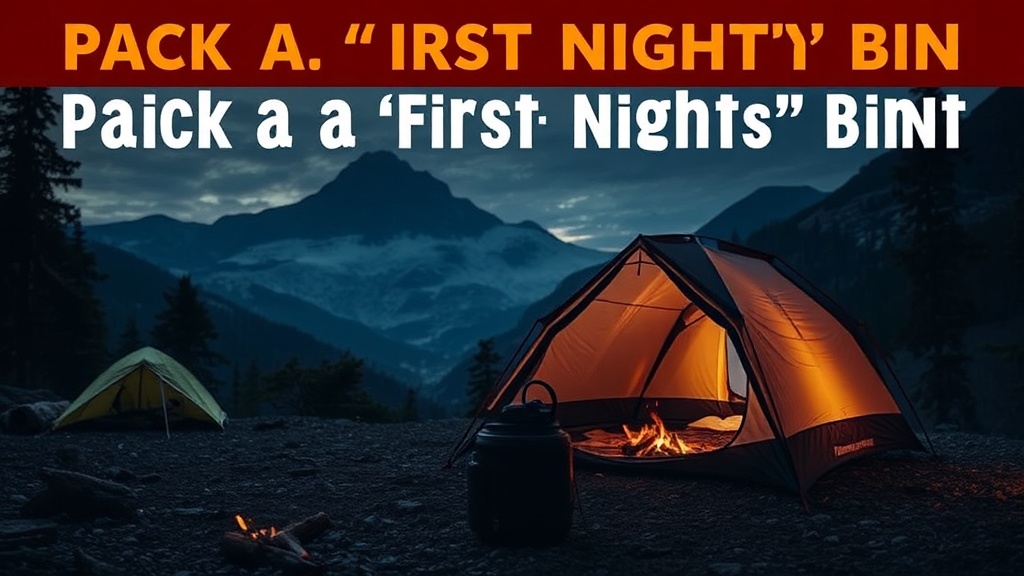
Pack a 'First Night' Bin for Instant Camp Setup

Quick Tip
Keep a dedicated first-night bin with essentials like headlamps, chairs, and snacks so you can relax immediately upon arrival without unpacking everything.
Setting up camp after dark is nobody's idea of a good time. A well-stocked "First Night" bin cuts the chaos. You'll have shelter, warmth, and dinner sorted in twenty minutes — no rummaging through eighteen duffel bags with a dying headlamp.
What Is a First Night Bin?
It's a single, clearly-labeled container — typically a REI Co-op Big Haul Duffel or a sturdy Rubbermaid tote — packed with only the gear needed to survive night one. Everything else stays in the truck until morning. The bin lives in the back seat, not buried under kayaks and firewood.
Here's the thing: most campers pack chronologically. Toiletries here, cooking gear there. But arrival day is different. You're tired. Light's fading. The kids are hungry. The First Night Bin flips the script — it prioritizes immediacy over organization.
What Should Go Inside?
The contents vary by trip type, but the philosophy stays constant: shelter, sleep, sustenance, and sanity. Here's a battle-tested setup for car camping:
| Category | Items | Why It Matters |
|---|---|---|
| Shelter | Tent body, poles, rainfly, 6 stakes | Everything else waits until morning |
| Sleep | Sleeping bags (2), pads, pillows | Comfort after a long drive |
| Light | Headlamp (charged), lantern, matches | Darkness comes fast in the woods |
| Kitchen | Jetboil Flash stove, fuel, mugs, freeze-dried meal | Hot food without the full kitchen kit |
| Hygiene | Toothbrushes, wet wipes, toilet paper, trowel | The basics — nothing fancy |
Worth noting: this isn't your full camping kit. No camp chairs. No hammock. No frisbee. Those come out after coffee.
How Do You Keep It Ready?
Refill and refresh the bin the moment you get home — not the night before your next trip. Wash the mugs. Check the fuel canister weight. Replace the batteries in your headlamp. Rotate the freeze-dried meal (those things have a shelf life, and Mountain House beef stroganoff gets weird after three years).
The catch? You'll be tempted to add "just one more thing." Resist. Every item you add is something else to find, unroll, or untangle when you'd rather be asleep. Stick to the list. The goal isn't preparedness — it's speed.
Store the bin somewhere accessible. Under a bed. In the hall closet. When the Friday afternoon urge strikes, grab it and go. No packing stress. No forgotten pillows. Just a quick setup and a cold drink while everyone else is still wrestling with tent poles.
"The best campsite is the one you're already set up at." — Every experienced camper, probably
For more gear organization tips, check out the National Park Service camping basics guide. It covers everything from Leave No Trace principles to bear safety — the stuff that matters once you're actually out there.