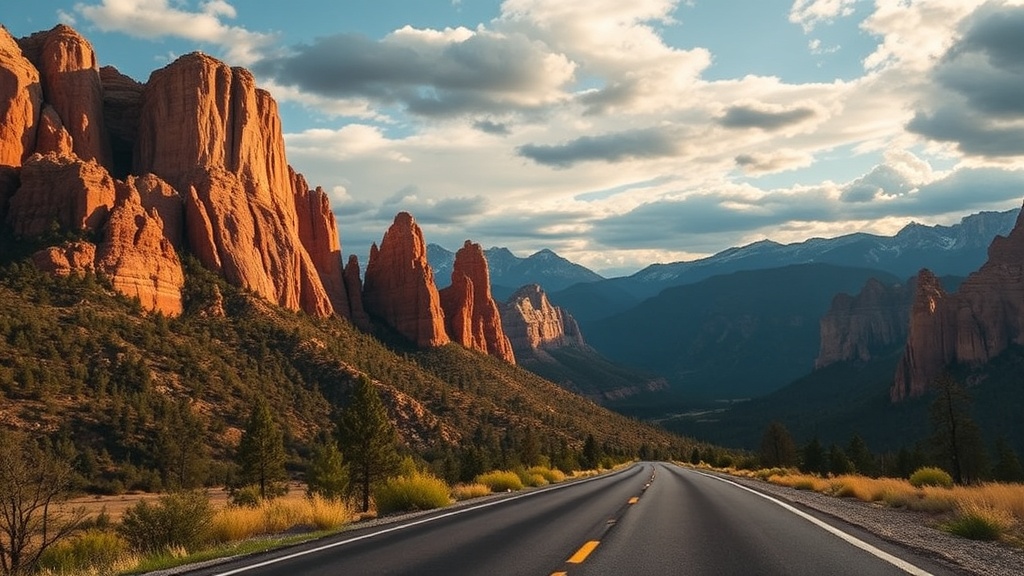
How to Plan the Ultimate National Park Road Trip: A Complete Guide

This guide breaks down everything needed to plan an epic national park road trip—from route mapping and campsite booking to gear selection and budgeting. You'll learn how to string together multiple parks without burning out, where to find the best campsites, and what gear actually matters when sleeping under the stars. Whether the destination is Yellowstone, Zion, or a bucket-list loop through the Southwest, these strategies keep the journey smooth and the memories sharp.
What's the best route for a national park road trip?
The best route depends on time available and which region calls to you—the classic Southwest loop, the Pacific Northwest circuit, or the Rocky Mountain cluster each offer distinct experiences.
For first-timers with two weeks, the Southwest "Grand Circle" hits hard. Start at the Grand Canyon (South Rim—easier access, better amenities), then drive north to Zion (hike The Narrows, but book the shuttle months ahead), then east to Bryce Canyon for hoodoos and dark-sky stargazing. From there, swing up to Capitol Reef (less crowded, excellent pie at the Gifford Homestead), then Arches and Canyonlands near Moab, Utah. That's six parks in a loop under 1,000 miles.
Got more time? Extend to Yellowstone and Grand Teton via the scenic US-89. The drive from Salt Lake City to Jackson Hole alone—through Logan Canyon and over Bear Lake Summit—justifies the detour. Worth noting: summer crowds peak between Memorial Day and Labor Day. September offers thinner crowds, cooler temps, and elk bugling season in the Rockies.
For West Coast travelers, the Pacific Northwest loop connects Olympic, Mount Rainier, and Crater Lake. Here's the thing—weather matters more here. Rainier's wildflowers bloom July through August, while Crater Lake's rim road often stays snowed in until July. Check nps.gov road conditions before committing.
What should you pack for a national park road trip?
Pack layers, reliable shelter, a first-aid kit, and cooking gear—plus bear canisters where required.
The gear loadout varies wildly between car camping at Yosemite's Upper Pines and backpacking the Teton Crest Trail. That said, some items prove universally useful. A REI Co-op Trailmade 2 tent handles most three-season conditions without breaking the bank or your back. For sleeping, the Nemo Disco 15 down bag offers spoon-friendly side sleeping and packs small. Don't skimp on the pad—insulation from the ground matters more than the bag rating. The Therm-a-Rest NeoAir XLite delivers R-value 4.2 warmth at under 12 ounces.
Cooking gear depends on group size. For two people, the Jetboil MiniMo boils water fast for coffee and dehydrated meals. Larger groups benefit from the Coleman Classic Propane Stove—two burners, bulletproof reliability, and cheap to replace if it gets rattled to death on forest roads. Store all scented items (toothpaste, sunscreen, bacon grease) in a Yeti Tundra 45 or bear box—many parks mandate hard-sided containers.
| Item | Budget Option | Upgrade Pick | Why It Matters |
|---|---|---|---|
| Tent | Coleman Skydome 4 ($120) | REI Co-op Half Dome SL 2+ ($329) | Weather protection and easy setup after long drives |
| Sleeping Bag | Kelty Cosmic 20 ($100) | Feathered Friends Egret 20 ($489) | Temperature ratings vary—go 10°F lower than expected lows |
| Navigation | Gaia GPS app ($40/year) | Garmin inReach Mini 2 ($400) | Cell service dies in canyons; satellite communicators save lives |
| Cooler | Igloo BMX 52 ($80) | Yeti Tundra 65 ($375) | Ice retention extends resupply intervals in remote areas |
| Headlamp | Petzl Tikkina ($20) | Black Diamond Spot 400-R ($65) | Red light mode preserves night vision and doesn't blind tentmates |
The catch? Overpacking kills the vibe. Every item needs a purpose. That camp chair feels nice until you're hauling it up to a third-floor walk-up hotel room in Vegas between park stops. Prioritize multi-use items—a buff works as a hat, dust mask, and pot holder.
How much does a national park road trip cost?
Expect to spend between $150 to $400 per day depending on accommodation choices, park fees, food preparation, and fuel costs.
The America the Beautiful Annual Pass ($80) pays for itself after three parks—individual park entrance fees run $30 to $35 per vehicle. Seniors can grab a lifetime pass for $80 (seriously—one-time fee, forever access). Active military and fourth graders get free annual passes.
Camping costs swing wildly. Developed campgrounds inside parks—think Yosemite Valley or Watchman at Zion—run $20 to $36 per night but book up six months out. Private campgrounds outside park gates charge $40 to $80. Boondocking on BLM land? Free. The trade-off: no showers, no toilets, and you'll need to pack out everything.
Food budgeting separates the pros from the tourists. Eating at park lodges (Old Faithful Inn, Bright Angel Lodge) runs $25 to $45 per plate. Cooking your own chili or pasta drops that to $5 per person. Stock up at grocery stores in gateway towns—prices inside parks carry the "convenience tax." Gas follows similar logic: fill up before entering remote parks like Death Valley or Canyonlands where stations might charge $6 per gallon.
Here's a sample budget for a 10-day Southwest loop (two people):
- Park pass: $80 (one-time)
- Camping (mix of park campgrounds and BLM): $250
- Food (mostly cooking, two restaurant meals): $400
- Gas (1,200 miles at 25 MPG, $3.50/gal): $168
- Gear rentals (bear canisters, etc.): $50
- Total: $948 ($95/day per person)
Where should you stay during a national park road trip?
Stay inside the park when possible—shorter commutes to trailheads, darker skies, and the magic of dawn before day-trippers arrive.
Frontcountry Campgrounds
These bookable sites offer restrooms, fire rings, and potable water. The gold standard? Madison Campground in Yellowstone (central location, bison herds at dawn) and North Campground at Bryce (walk to the rim for sunrise). Reserve through recreation.gov—most parks release blocks of sites six months in advance, with a rolling window (new dates unlock daily at 10 a.m. Eastern).
Backcountry Permits
For solitude seekers, backcountry camping requires permits obtained via lottery or walk-up. Grand Teton's Teton Crest Trail demands advance reservations ($45 permit fee). Yosemite's Half Dome needs a separate permit for the cables. The permits seem bureaucratic—they're not. They limit impact and keep you alive. Rangers check.
Park Lodges and Gateway Towns
Not everyone sleeps on the ground. Old Faithful Inn (Yellowstone) and Zion Lodge offer park immersion with mattresses. Book a year ahead—literally. Missed the window? Gateway towns like Springdale (Zion), West Yellowstone (Yellowstone), and Gatlinburg (Great Smoky Mountains) offer motels and Airbnb options. The drive adds 30 to 60 minutes each way. That said, hot showers and restaurants have their place on longer trips.
How do you reserve campsites in national parks?
Book through recreation.gov or individual park websites—most popular campgrounds fill within minutes of release.
The system rewards preparation. Create your recreation.gov account early. Save credit card details. Know exactly which campground and dates you want. When the clock hits 10 a.m. Eastern six months out, click fast. For ultra-competitive spots like North Pines in Yosemite Valley or Watchman in Zion, have backup dates ready.
Some parks—Grand Canyon's backcountry, Denali's bus-accessible campgrounds—use lotteries months in advance. Others hold back sites for walk-ups. Camp 4 in Yosemite releases half its sites day-of at 8 a.m. Show up early with ID. The line forms at dawn.
Worth noting: cancellation windows open constantly. Check recreation.gov obsessively in the weeks leading up to departure. Sites appear at odd hours—midnight, 6 a.m., during lunch breaks. Flexibility with dates (Tuesday vs. Friday arrivals) doubles your odds.
What vehicle works best for national park road trips?
A reliable vehicle with clearance, cargo space, and range—think Subaru Outback, Toyota 4Runner, or Ford Bronco Sport—handles most park roads without the gas-guzzling penalty of full-size trucks.
Most national park roads are paved. The exceptions matter though. White Rim Road in Canyonlands demands high clearance and four-wheel drive. Alpine Loop in Colorado (connecting Silverton to Ouray) gets rough. Death Valley's Racetrack Playa requires sturdy tires and spare water.
That said, you don't need a $60,000 overland rig. A Honda CR-V with all-terrain tires manages most graded dirt roads. The key items: a full-size spare (not a donut), a tire repair kit, and enough fuel range. Some parks—Yellowstone's northeast entrance, Big Bend's remote camps—stretch 80+ miles between gas stations.
Roof racks expand capacity but kill gas mileage. Internal organization beats exterior cargo boxes for frequent stops. Keep daily essentials—water, snacks, rain jackets—within arm's reach. Everything else can live in the back.
Before departure, check the National Park Service website for road closures, construction delays, and permit requirements. The best-laid plans crumble when Tioga Pass closes in October or Going-to-the-Sun Road doesn't plow until July. Adapt. The parks aren't going anywhere—and they'll be there when you're ready.